
Don’t Ignore these 4 Warning Signs of a Catalytic Converter Problem
Ken’s Muffler & Brakes • 11 January 2025
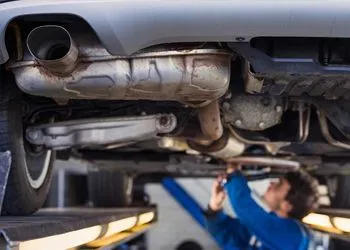
A man is working on the underside of a car in a garage.

The catalytic converter is an important component of your vehicle’s exhaust system, responsible for reducing harmful emissions and enabling proper engine performance. When it begins to fail, your vehicle’s efficiency and environmental impact are at risk. Recognizing the warning signs of a catalytic converter problem can help you address the issue before it leads to more severe trouble. At Ken’s Muffler & Brakes, we provide expert catalytic converter replacement in the greater Dallas area. Here’s a look at four symptoms of a catalytic converter problem.


Reduced Engine Performance

One of the first signs of a failing catalytic converter is a noticeable drop in engine performance. You may experience sluggish acceleration, reduced power, or difficulty climbing hills. This occurs because a clogged catalytic converter restricts exhaust flow, making it harder for your engine to function efficiently.


Decreased Fuel-Efficiency

A faulty catalytic converter can cause your vehicle to burn more fuel than usual. This happens because the engine has to work harder to push exhaust gases through the clogged or damaged converter. If you notice a significant drop in gas mileage, it’s worth having your catalytic converter inspected as part of the diagnosis.


Check Engine Light Illumination

The check engine light is often triggered when there’s an issue with the catalytic converter. Modern vehicles are equipped with oxygen sensors that monitor the efficiency of the converter. If the sensors detect abnormal readings, they will activate the check engine light. A diagnostic scan can confirm whether the catalytic converter is the source of the problem.


Rotten Egg Smell from the Exhaust

A common indicator of a catalytic converter problem is a strong sulfur or “rotten egg” smell coming from the exhaust. This odor is caused when the converter is no longer able to effectively neutralize hydrogen sulfide. If you detect this smell, it’s a sign that your catalytic converter may be failing and needs immediate attention.


Catalytic Converter Replacement in Dallas, TX

For catalytic converter replacement in Dallas and the surrounding area, contact Ken’s Muffler & Brakes at  214-308-2320. Feel free to give us a call to schedule an appointment for car care in Dallas! 

by Ken’s Muffler & Brakes 9 March 2026
A properly functioning fuel system is critical for your vehicle’s performance. From fuel pumps to injectors and filters, each component must work correctly to ensure your engine runs smoothly. When problems arise, they should be promptly addressed. Many drivers have questions about how fuel system repairs work and what causes issues. At Ken’s Muffler & Brakes, our local mechanics are happy to answer your questions about fuel system repair in the greater Dallas area. What Are Common Symptoms of Fuel System Problems? Fuel system issues can present in several ways. Common signs include difficulty starting the engine, rough idling, poor acceleration, and stalling. You may also notice decreased fuel-efficiency or a strong fuel odor. Ignoring these symptoms can lead to more serious engine problems. Prompt attention is key to preventing costlier repairs. How Is a Fuel System Problem Diagnosed? Professional technicians use specialized tools and diagnostic equipment to identify fuel system issues. They may perform fuel pressure tests, inspect lines for leaks, check the operation of the fuel pump, and clean or test fuel injectors. A thorough inspection ensures that the underlying cause is found rather than simply treating symptoms. Accurate diagnosis is essential to prevent repeated problems and ensure the repair is effective. What Does Fuel System Repair Involve? The specific repair depends on the component at fault. Replacing a clogged fuel filter is a relatively simple fix, while a faulty fuel pump or damaged injector are other common repairs. In some cases, fuel lines may need replacement to stop leaks. After repairs, the system is tested to ensure proper fuel flow and engine performance. How Can Fuel System Problems Be Prevented? Preventive maintenance is the best way to avoid fuel system issues. Regularly replacing fuel filters and using high-quality fuel can help keep the system healthy. Periodic inspections by a professional can catch early signs of wear, leaks, or contamination. Addressing minor issues promptly and following the manufacturer’s maintenance schedule helps extend the life of your fuel system. Where Can I Get Fuel System Repair in Dallas, TX? For expert fuel system repair in Dallas and the surrounding area, contact Ken’s Muffler & Brakes at  214-308-2320  . Feel free to give us a call to schedule an appointment for car care in greater Dallas !
by Ken’s Muffler & Brakes 10 February 2026
Engine oil keeps your car running smoothly by lubricating moving parts, reducing friction, and helping to prevent overheating. Neglecting oil changes can lead to decreased performance and costly repairs over time. Understanding the essentials of oil changes can help you maintain your vehicle’s reliability. At Ken’s Muffler & Brakes, we’re happy to answer your questions about oil changes in the greater Dallas area. How Often Should I Change My Oil? The frequency of oil changes depends on your vehicle and the type of oil used. Traditional advice often suggested every 3,000 miles, but modern engines and synthetic oils allow for longer intervals, sometimes up to 7,500 or even longer. Vehicle manufacturers provide recommended oil change intervals in the owner’s manual. Following these guidelines helps ensure optimal engine performance and avoids unnecessary wear. What Type of Oil Should I Use? Using the right oil for your vehicle is essential. There are different types, including conventional, synthetic blend, and full synthetic oils, each with unique properties. Full synthetic oils offer superior protection and performance, particularly for high-mileage or high-performance engines, while conventional oils may be sufficient for older vehicles or cars with simpler engines. Viscosity, indicated by numbers like 5W-30, is also critical. Using the correct type and viscosity recommended by your manufacturer protects your engine and promotes smooth operation. Can I Drive with Low or Old Oil? Driving with low or degraded oil can be harmful. Low oil levels reduce lubrication, increasing friction and heat, which can cause engine damage. Old, dirty oil loses its ability to lubricate and protect engine components effectively, leading to potential wear and reduced fuel-efficiency. Checking your oil regularly and changing it on schedule helps prevent these issues and keeps your engine running more efficiently. Is Professional Service Necessary, or Can I Do It Myself? While some car owners perform oil changes themselves, professional service offers several advantages. Technicians ensure the correct oil type and quantity are used, safely dispose of old oil, and can perform additional inspections. For those who are not highly experienced with car maintenance, professional service reduces the risk of mistakes and ensures the job is done correctly. Where Can I Get a Full-Service Oil Change in Dallas, TX? For a full-service oil change in Dallas and the surrounding area, contact Ken’s Muffler & Brakes at  214-308-2320  . Feel free to give us a call to make an appointment !
Show More →