
Common Signs of Suspension Trouble that Should Be Inspected ASAP
Ken’s Muffler & Brakes • 10 August 2025
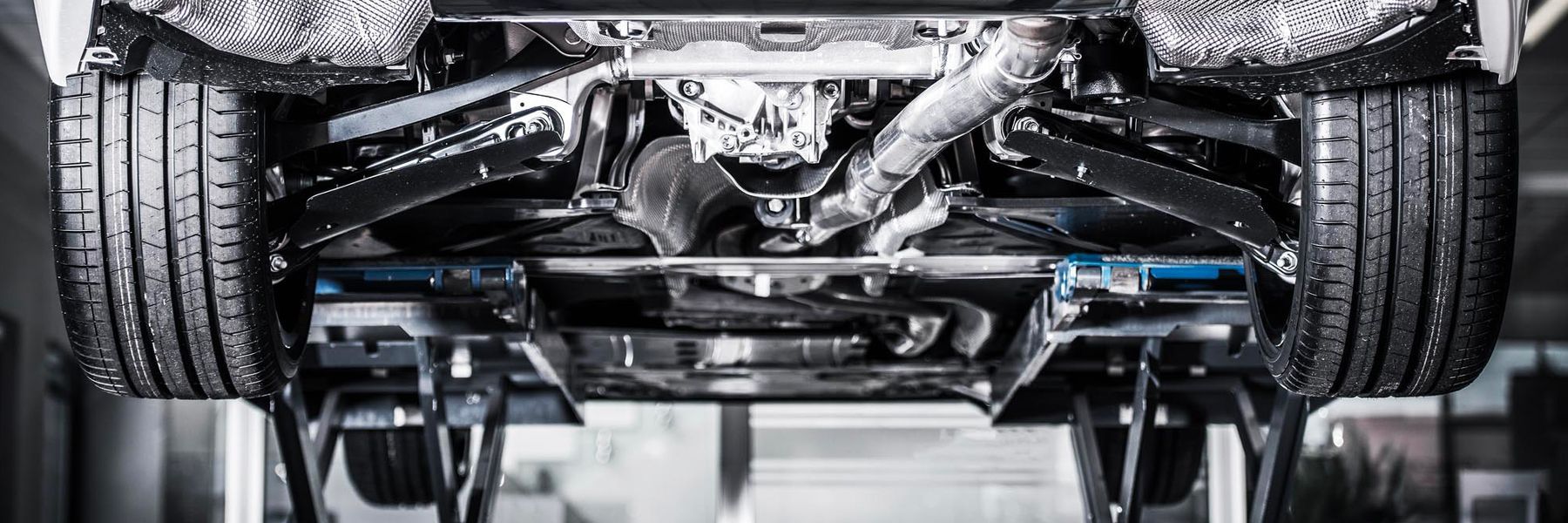
Underside view of a car on a lift, showcasing the suspension, exhaust, and tires. Black and gray tones with a blue bar.

Your vehicle’s suspension system plays a vital role in ensuring a smooth, stable ride. It helps maintain tire contact with the road, supports handling and braking, and absorbs the shock from bumps and rough surfaces. When the suspension starts to fail, it can affect not only comfort, but also your safety. Knowing the early warning signs of a suspension problem can help you address the issue before it leads to bigger and more expensive repairs. At Ken’s Muffler & Brakes, we provide expert suspension repair in the greater Dallas area. Here’s a look at four common indications of a suspension issue.


Rough or Bumpy Ride

One of the most noticeable signs of a suspension issue is a sudden change in ride quality. If your car starts to feel every bump, pothole, or crack in the road, your shocks or struts may be worn out. These components are designed to absorb impacts and keep your vehicle stable. A rough ride usually means that they’re no longer doing their job effectively, and replacement may be necessary to restore comfort and control.


Drifting or Pulling During Turns

If your car feels like it’s drifting or pulling to one side when you’re turning a corner, it could be a sign of a suspension problem. This symptom often points to worn shocks or damaged suspension components that can no longer keep the vehicle stable. Ignoring this issue can increase the risk of a rollover or loss of control, especially at higher speeds or on winding roads.


Uneven Tire Wear

Your suspension system helps distribute the vehicle’s weight evenly across all four tires. When something is wrong—such as misaligned wheels, damaged struts, or failing control arms—you may start to see uneven or premature tire wear. If your tires show more wear on one side or in unusual patterns, it’s a good idea to have the suspension checked along with alignment.


Nose Dives When Braking

When your car sharply dips forward during hard braking, it’s often a sign that the front suspension components, particularly the shocks, are worn out. This “nose dive” effect reduces your ability to stop quickly and safely, as more force is being transferred to the front tires. It’s not only uncomfortable—it’s also a potential safety hazard.


Suspension Repair in Dallas, TX

For auto repair in Dallas and the surrounding area, contact Ken’s Muffler & Brakes at 214-308-2320. Feel free to give us a call to make an appointment!

by Ken’s Muffler & Brakes 6 January 2026
Your vehicle’s brakes are one of its most critical safety systems, allowing you to slow down and stop with control and confidence. Because brake components wear down over time, problems can develop gradually and often go unnoticed at first. Recognizing the common warning signs of a brake problem can help you take action early, preventing dangerous situations and more expensive repairs. At Ken’s Muffler & Brakes, we provide expert brake repair in the greater Dallas area. Here are four common warning signs of brake trouble. Squealing or Grinding Noises One of the most noticeable signs of brake trouble is unusual noise when you press the brake pedal. A high-pitched squealing sound often indicates worn brake pads, many of which are designed to emit noise as a warning. Grinding noises are more serious and usually mean the brake pads are completely worn, potentially leading to serious rotor damage if not addressed promptly. Soft Brake Pedal A brake pedal that feels soft, spongy, or less responsive than usual is a clear warning sign. This condition often points to air in the brake lines, low brake fluid, or a hydraulic system issue. Any loss of firmness in the brake pedal should be addressed immediately, as it can significantly reduce stopping power. If your vehicle has a brake fluid leak, then you’re dealing with a major safety hazard and should get towed to the shop. Brake Warning Light The brake warning light on your dashboard is designed to alert you to potential issues within the braking system. It may indicate low brake fluid, worn components, or another system malfunction. Ignoring this warning can allow minor problems to escalate into major safety concerns. Vibrations When Braking If you feel vibrations while braking, it may be a sign of warped or uneven brake rotors. This issue can occur due to excessive heat buildup. Vibrations can reduce braking smoothness and control, making it harder to stop the vehicle safely, especially at higher speeds. Brake Repair in Dallas, TX For auto repair in Dallas, TX and the surrounding area, contact Ken’s Muffler & Brakes at  214-308-2320  . Feel free to give us a call to schedule an appointment!
by Ken’s Muffler & Brakes 8 December 2025
Your car’s shocks play a vital role in keeping your ride smooth, stable, and safe. They help absorb bumps, maintain tire contact with the road, and support proper handling. When shocks begin to fail, the effects can quickly impact comfort and safety. At Ken’s Muffler & Brakes, we provide expert suspension repair in the greater Dallas area. Here are five warning signs that your shocks should be replaced now Your Ride Feels Excessively Bouncy One of the most common symptoms of worn-out shocks is a bouncy or unstable ride. If your car continues to bounce after going over a bump, it’s a sign that the shocks are no longer effectively absorbing impact. This excessive movement makes the vehicle feel less controlled. The Front End Dives When Braking Worn shocks can cause the front of your car to lurch forward when you press the brake pedal. This forward “nose dive” happens because the shocks are no longer keeping the car level during deceleration. Not only is this uncomfortable, but it also increases stopping distance, which can be dangerous in emergency situations. You Notice Uneven or Rapid Tire Wear Shocks help keep your tires firmly planted on the road. When they fail, the tires can bounce excessively, causing uneven patches of wear on the tread. These unusual wear marks are a strong indication that the wheels aren’t maintaining proper road contact. This not only shortens the life of your tires, but also reduces traction and control. Your Car Sways or Leans in Turns If your vehicle feels like it sways, leans excessively, or struggles to stay stable when turning, the shocks may no longer be providing adequate support. This instability is especially noticeable at higher speeds or on winding roads. Healthy shocks keep your car planted and level through curves. Once they weaken, the extra body roll increases the risk of losing control, making this a critical sign that replacement may be necessary. Fluid Is Leaking From the Shocks Shocks contain hydraulic fluid that allows them to absorb energy and dampen movement. If you notice oily residue or visible leakage on the shock, the internal seals have likely failed. Without fluid, the shocks cannot function properly. Suspension Repair in Dallas, TX For expert auto repair in Dallas, TX and the surrounding area, contact Ken’s Muffler & Brakes at  214-308-2320  . Feel free to give us a call to schedule an appointment for car care in greater Dallas!
Show More →